Inspired by the heritage of British artisan craft, from Rose de Borman's textiles to unique studio ceramics, we explore how to turn an ordinary room into a space that genuinely feels like yours. There is a quiet revolution happening in British interiors at the moment, and it has very little to do with buying more furniture. Instead, it is about buying better — choosing a handful of well-made, versatile pieces and then letting a few handcrafted objects do the talking. Mass-produced furniture, however elegant its lines, tends to look a touch anonymous on its own. Add a hand-thrown ceramic vase, a length of block-printed linen, or a single painting with a story behind it, and the whole room suddenly breathes.
This is, in many ways, the essence of what people now call British Taste: a style built not on excess but on restraint paired with character. It favours a neutral, dependable base — sofas, sideboards, desks, wardrobes — over which layers of personality are added slowly, over years, rather than purchased all at once from a single catalogue. Local makers have become central to this story. Studios producing textiles and ceramics in the tradition of Rose de Borman have found their way into some of the country's most photographed interiors, while independent exhibitions in Dalston have introduced a new generation to small-batch pottery and hand-painted fabric. Even the major fashion houses have taken notice: the Burberry Makers House craft traditions, celebrated in a series of collaborative showcases with British artisans, demonstrate that heritage skills and contemporary design are far from mutually exclusive — if anything, they need each other.
The Heritage of British Craftsmanship
To understand why handmade objects sit so naturally in British homes, it helps to look back a little further than the current interiors trend. The story really begins with the Arts & Crafts Movement of the late nineteenth century, a reaction against the cold uniformity of industrial mass production. Its leading voice, William Morris, argued that everyday objects — a chair, a length of fabric, a tile — deserved the same care and beauty as fine art. That philosophy never really left British design; it simply went quiet for a while and has now resurfaced with real force.
Across the country, small local workshops continue to carry this tradition forward, training British makers in skills that are, quite literally, generations old. Handmade furniture built by hand rather than assembled from flat-pack parts still relies on the same instincts Morris championed: a respect for natural materials and an understanding that a piece made to be repaired, rather than replaced, is a piece made to last. Oak, ash, and walnut remain the backbone of this tradition — each valued for a different reason. Oak for its strength and character, ash for its flexibility and pale, elegant grain, walnut for the rich depth of tone it brings to a room. Alongside solid wood, British workshops have kept ceramics and woven textiles alive as everyday crafts rather than museum pieces, which is precisely why a hand-glazed bowl or a hand-loomed throw still feels so at home next to a modern sofa. It is not nostalgia. It is continuity.
Eclecticism in Action: Combining Old, Crafted, and New
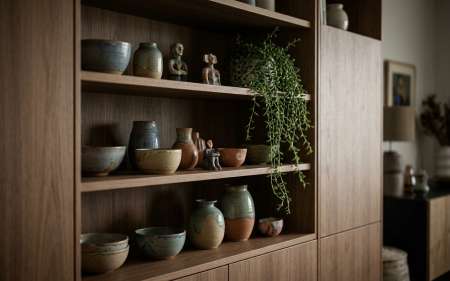 The word "eclectic" can sound intimidating, as though it demands an expert eye and years of collecting. In practice, it is one of the most forgiving approaches to interior design there is, precisely because it does not ask every piece in the room to match. What it does ask is that each piece earns its place.
Start small. A hand-painted textile thrown over the back of a plain sofa immediately introduces colour and history without committing you to reupholstering anything. A set of embroidered or block-printed cushions on an otherwise minimalist reading chair softens the whole silhouette of the room. Ceramic figurines, ridged stoneware bowls, or a cluster of ceramics with slightly imperfect, hand-finished glazes on an open shelf will always look more considered than a symmetrical, catalogue-bought display — because they are. These are the details that make a visitor pause, ask where something came from, and remember the room afterwards.
For a masterclass in how this works at scale, it is worth looking at the much-admired Bavent House interior design in the east of England. Here, boldly patterned, designer wallpaper sits comfortably alongside deep, cushioned reading nooks and worn leather armchairs, while a rotating collection of artisan textiles gives each room a slightly different mood depending on the season. Nothing in the house looks as though it was bought to "complete a look." Everything looks as though it arrived because someone loved it. That is precisely the spirit worth borrowing for a flat in London or a cottage in the Cotswolds alike: functional, comfortable furniture as the stage, and craft as the performance on top of it.
The trick, if there is one, is restraint in variety. Two or three artisan pieces per room tend to work better than ten. Overcrowding a space with "interesting" objects dilutes the very individuality you are trying to create. Choose the pieces that mean something — a ceramic bowl from a trip, a cushion made by a maker whose story you know — and let the furniture around them stay quiet.
Creating Harmony in the Home & Office Zone
Modern life has blurred the line between where we work and where we relax, and nowhere is that more visible than in the home office. The challenge is finding a balance: a workspace needs to feel calm enough to concentrate in, yet personal enough that you do not dread sitting down at the desk each morning.
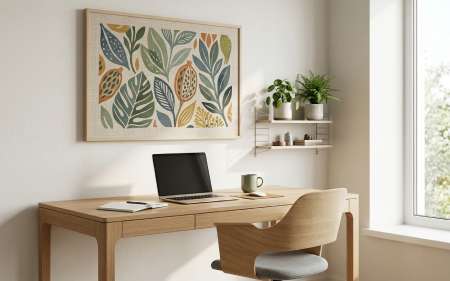 This is where contemporary home office furniture trends have shifted noticeably in the last few years. Sleek, understated desks and genuinely ergonomic chairs have become the sensible foundation — clean lines, supportive seating, enough storage to keep the surface clear. But foundation is not the same as finished. A wall left entirely bare above a minimalist desk can feel sterile rather than serene. This is exactly the gap that a single striking piece of wall art fills: a framed authentic scarf, a hand-printed textile stretched and mounted, or a small gallery of prints with a shared colour thread. It gives the eye somewhere to rest during a long call, and it makes the workspace feel like an extension of you rather than a corner borrowed from a hotel business centre.
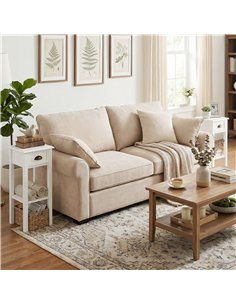
The living room asks for a gentler version of the same idea. A neutral-toned sofa or a simple daybed is, frankly, one of the best investments you can make, precisely because its plainness is what allows it to be endlessly restyled. Swap in a set of decorative cushions carrying folkloric motifs, hand-embroidered patterns, or bold botanical prints, and the entire room shifts character with the seasons, without a single piece of furniture needing to change. A neutral base is not a compromise — it is a canvas, deliberately left open so that art and craft can do the heavy lifting.
How Contemporary British Homes Blend Art with Everyday Living
Step back from furniture and cushions for a moment, and the same instinct shows up at the level of the building itself. Contemporary British architecture, particularly in renovated period properties, has developed a real fondness for open space: knocking through walls that once separated small, dim rooms to create a single space where cooking, working, and relaxing can all coexist. That openness only works, though, if it is handled with care, and light is usually the deciding factor. Large windows, roof lanterns, and glazed extensions are no longer treated as luxuries but as essential tools for making an open-plan home feel calm rather than cavernous.
Into these light-filled, open spaces, British homeowners are increasingly choosing bespoke furniture over anything off the shelf — pieces sized and shaped for a specific room rather than furniture the room has to be arranged around. A made-to-measure bench beneath a bay window, a shelving unit built into an awkward alcove: these choices treat furniture as part of the architecture rather than an afterthought placed on top of it. Artwork plays a similarly structural role. Rather than being scattered decoratively, a single large canvas or a considered gallery wall is now often used to anchor an open room, giving the eye a fixed point in a space that might otherwise feel formless. And running through all of it is a very British insistence on functionality — the belief that a beautiful room which does not actually work for daily life has failed at the one thing that mattered most. Light, space, art, and usefulness, in other words, are treated as a single design problem, not four separate ones.
Why Handmade Furniture Creates Timeless Interiors
All of this — the craft heritage, the open, light-filled architecture, the careful mixing of old and new — eventually comes back to a very practical question: what should the furniture underneath it all actually be like?
The honest answer is that it should be unremarkable in the best possible sense. Furniture built from solid wood, using proper joinery and construction techniques rather than shortcuts, is furniture that does not compete with the art and craft around it — it simply supports it, for years, without complaint. This is really what craftsmanship means in a practical sense: not ornamentation, but attention to the details nobody sees, the ones that determine whether a drawer still glides smoothly in a decade's time. Quality of this kind is rarely loud. It shows up as durability — a table that survives house moves, children, and dinner parties without ever needing to be replaced — and as a kind of quiet reliability that lets you stop thinking about the furniture altogether and start living around it.
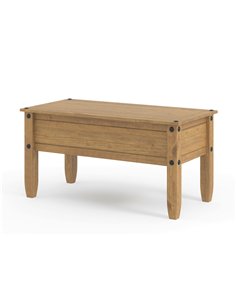
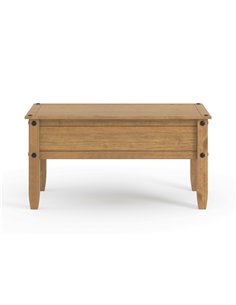
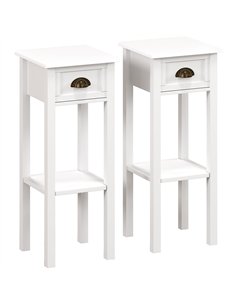
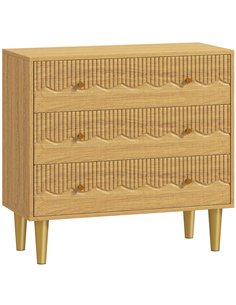
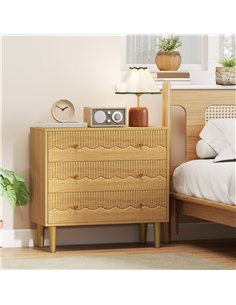
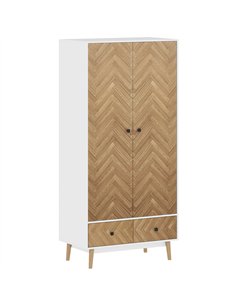
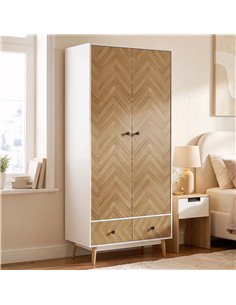
This is precisely the role FastDaddyShop's furniture is designed to play. Our desks, wardrobes, sofas, and armchairs are built as practical furniture first: solid, honestly constructed, and made to be lived with rather than admired from a distance. We are not trying to compete with the ceramics on your shelf or the textile on your wall — we are trying to be the dependable, well-made base that lets those pieces stand out. A home does not become timeless because every object in it is precious. It becomes timeless because the furniture is trustworthy enough to disappear into the background, leaving room for everything you have chosen to say about yourself.
The Art of Colour and Texture
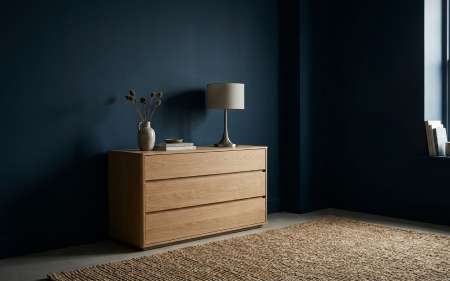 If furniture is the structure of a room, colour and texture are its personality. And here, British interiors have quietly moved away from the safety of all-white walls toward something braver — and, as it turns out, more forgiving.
Deep, saturated wall colours such as Hague Blue or a rich forest green have become particular favourites among interior designers, and for good reason. Counterintuitively, dark walls are more forgiving than pale ones: they absorb the small imperfections, mismatched frames, and everyday clutter that a stark white wall would expose mercilessly. They also do something remarkable for furniture and plants alike — wood tones glow against them, brass and metal accents catch the light more dramatically, and greenery looks lusher against a moody backdrop than it ever does against white. A deep-coloured wall is not a bold, difficult choice. It is, in practice, one of the easiest ways to make an ordinary room look deliberately styled.
Texture matters just as much as colour, and the goal is contrast rather than uniformity. Pair the warmth of natural wood with the rougher, more tactile feel of a jute or woven palm-leaf rug. Set matte, hand-finished ceramics beside something glossy or metallic — a lacquered tray, a brushed-steel lamp base. It is this friction between textures, rather than any single "correct" material, that gives a room depth and stops it from feeling like a showroom display.
Practical Advice and a Final Word from FastDaddyShop
None of this requires an unlimited budget, and it certainly does not require replacing every piece of furniture you own. The house you actually want to live in is built from two simple ingredients: dependable, well-made basics, and a small, carefully chosen collection of artisan accents that reflect who you are. Buy furniture that will genuinely last — sturdy joinery, honest materials, timeless proportions — and then spend your remaining time and budget on the objects that carry a story: a hand-thrown vase, a length of printed fabric, a painting that actually means something to you.
At FastDaddyShop, we see our role in this process quite clearly. Our desks, wardrobes, sofas, and armchairs are designed to be the perfect, reliable, and affordable base that anyone can make entirely their own with a touch of art. We are not trying to sell you a finished look; we are trying to sell you the dependable furniture that disappears quietly into the background so that your own taste — whatever it happens to be — can take centre stage.
So, before you reach for another matching set, consider the alternative: one excellent sofa, one honest desk, one chair built to be sat in for a decade — and then, around them, the ceramics, the textiles, the small found objects that no catalogue could ever sell you. That is where a house stops looking furnished and starts looking lived in.
Ready to build your own dependable base? Explore the updated collection of home and office furniture at FastDaddyShop Home & Office and start layering your own story on top.