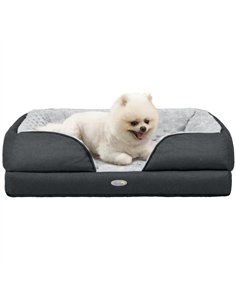
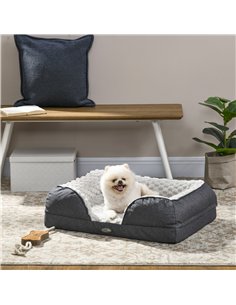
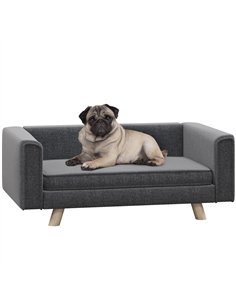
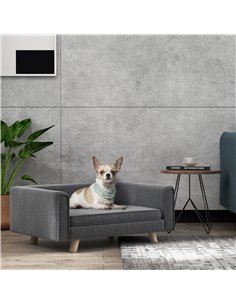
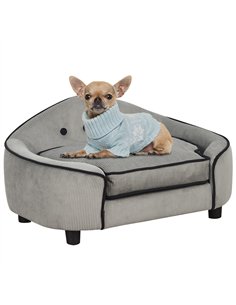
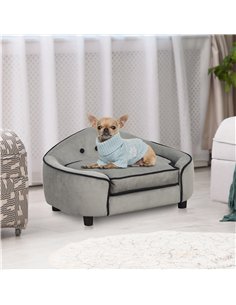
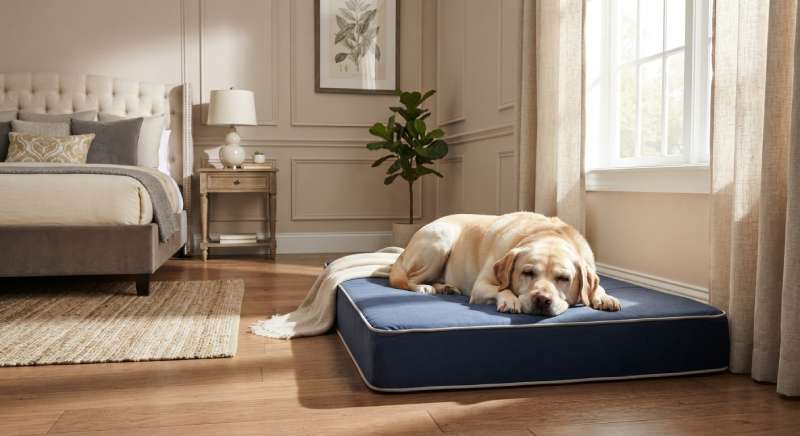
 Choosing a dog bed is not as simple as picking the first cushion that catches your eye. A bed that suits a nine-week-old Cockapoo puppy will rarely suit an eleven-year-old Labrador with stiff hips, and a bed that works for a flat in London may be entirely wrong for a draughty farmhouse in the Scottish Highlands. At FastDaddyshop we help customers across the UK match dogs of every breed, age and temperament with a bed that actually fits their needs — not just their sofa colour scheme.
This guide walks through the main types of dog beds, pet mattresses and orthopaedic dog cushions available, how to measure your dog correctly, which materials perform best in which conditions, and the mistakes that shoppers make most often when buying online. Please note that our range, stock levels and prices change frequently, so treat any figures below as general guidance rather than a fixed catalogue — always check current availability on the product page before ordering.
Why the Right Dog Bed Matters
A dog spends between 12 and 18 hours a day asleep, and older or larger breeds can sleep even longer. That means the surface a dog rests on has a direct effect on joint health, coat condition and even behaviour. From experience of our store consultants, dogs that are moved from a hard floor or an unsupportive old cushion onto a properly sized orthopaedic dog bed often settle faster in the evening and show fewer signs of restlessness overnight, particularly dogs over the age of seven.
Our consultants often advise customers not to buy on impulse: a bed bought purely because it looks stylish in a product photo may be too shallow, too firm, or too small once it arrives, and reordering a bulkier item by courier is far less convenient than getting the size right the first time.
Main Types of Dog Beds and Pet Mattresses
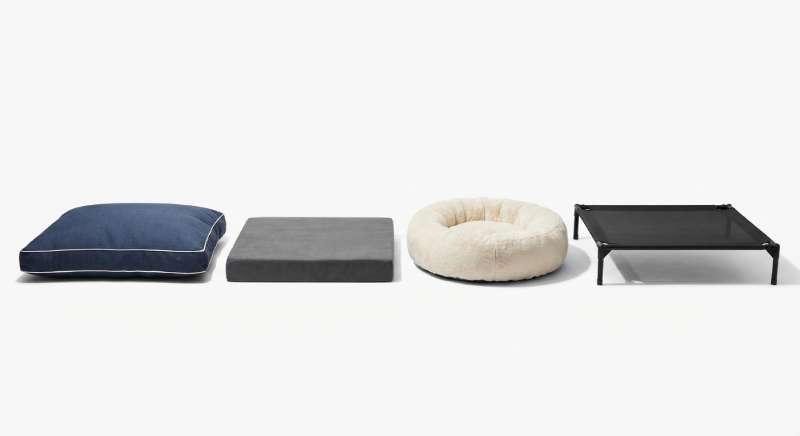 The commercial range typically sold under the "dog bed" category actually covers several distinct product types, each suited to different dogs and different rooms of the house:
- Standard cushion dog beds — a fabric cover filled with polyester fibre, suited to healthy adult dogs without joint problems.
- Orthopaedic dog beds — filled with high-density memory foam, typically 7–10 cm thick, recommended for dogs over 25 kg or dogs aged 7 years and above.
- Bolster or donut dog beds — raised sides that many anxious or nesting breeds (such as Whippets and small terriers) prefer, as the raised rim gives a sense of enclosure.
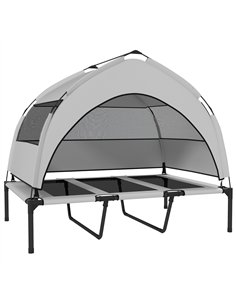
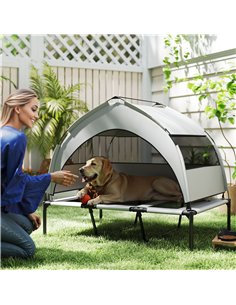
- Elevated / raised dog beds — a fabric or mesh sling on a metal or plastic frame, useful in warmer months as air circulates underneath, keeping the dog's body temperature roughly 2–3°C cooler than on a flat cushion.
- Heated dog beds — low-voltage heating pads built into the base, generally suited to homes where indoor temperatures drop below 15°C, such as unheated conservatories or garages.
- Crate mats and travel dog beds — thin, foldable pads designed to fit inside a standard crate or car boot, usually under 5 cm thick so they don't reduce headroom.
- Waterproof and outdoor dog beds — beds with a sealed or PVC-backed base, intended for kennels, porches or dogs that come in from the garden wet.
Choosing the Correct Dog Bed Size
Undersizing is, from the experience of our managers, the single most common reason customers request an exchange. A dog needs enough room to lie fully stretched out on its side, plus a margin of roughly 15–20 cm. The table below is a general starting guide; always measure your own dog nose-to-tail while lying flat, rather than relying on breed name alone, since weight within a breed can vary considerably.
| Dog size category |
Typical weight |
Example breeds |
Recommended bed length |
| Extra small |
Up to 4 kg |
Chihuahua, Yorkshire Terrier |
45–55 cm |
| Small |
4–10 kg |
Pug, Cavalier King Charles Spaniel |
60–70 cm |
| Medium |
10–25 kg |
Cocker Spaniel, Border Collie |
75–90 cm |
| Large |
25–40 kg |
Labrador Retriever, German Shepherd |
95–110 cm |
| Extra large / giant |
40 kg and above |
Great Dane, Newfoundland |
115–140 cm |
On practice, our consultants note that mixed-breed dogs and deep-chested breeds (such as Greyhounds or Dobermanns) often need a bed one size category larger than their weight alone would suggest, simply because of their body length.
Comparing Filling and Cover Materials
The filling of a dog bed affects support, durability and how easy it is to keep clean — three factors that matter more than colour or pattern when a dog will be using the bed daily for two or three years.
| Material |
Best suited to |
Durability |
Care |
| Polyester fibre fill |
Puppies, healthy adult dogs |
Loses shape after roughly 12–18 months of daily use |
Cover usually machine-washable at 30–40°C |
| Memory foam (high density) |
Senior dogs, dogs with hip or joint conditions, large breeds |
Holds shape for 3–5 years under normal use |
Cover removable and washable; foam itself should only be spot-cleaned |
| Sherpa fleece / plush |
Small dogs, cold rooms, dogs that like to burrow |
Moderate; pilling can occur after frequent washing |
Machine-washable, but tends to shed fibres for the first few washes |
| Canvas or PVC-backed outdoor fabric |
Kennels, porches, dogs that come in wet or muddy |
High; resistant to moisture and chewing |
Wipe-clean, some models fully hose-washable |
From the experience of the FastDaddyshop team, a removable, zip-off cover is worth prioritising over almost any other feature: dogs that are shedding, moulting, or prone to muddy paws will make even the sturdiest filling look worn within weeks if the cover cannot be washed separately.
Dog Beds for Puppies, Adults and Senior Dogs
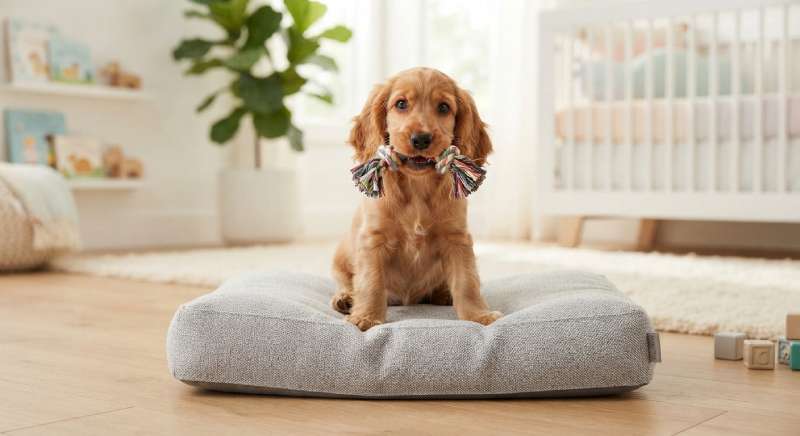 Age changes what a dog needs from a bed almost as much as size does.
- Puppies (up to around 12 months): a durable, chew-resistant cushion bed is generally more practical than an expensive orthopaedic model, since puppies are still teething and growing rapidly.
- Adult dogs (1–7 years): a standard or bolster bed is usually sufficient for healthy dogs without existing joint issues.
- Senior dogs (7 years and above): our consultants frequently recommend an orthopaedic memory foam bed at this stage, as reduced mobility and early joint stiffness are common even before a formal diagnosis.
Expert caution: if your dog has already been diagnosed with arthritis, hip dysplasia or another joint condition, discuss bedding thickness and support with your vet before purchasing — a bed marketed as "orthopaedic" is not a medical device, and support levels vary considerably between manufacturers.
Typical Mistakes When Choosing a Dog Bed
- Buying by breed name alone instead of measuring the individual dog lying flat.
- Choosing a thin cushion bed for a heavy or senior dog, where the filling flattens within weeks and stops offering any real support.
- Ignoring the cover material for dogs with allergies or sensitive skin — some synthetic fabrics can worsen itching in dogs prone to dermatitis.
- Overlooking machine-wash instructions, then finding the bed cannot be cleaned easily after the first accident.
- Placing a plush or heated bed directly next to a radiator or in direct summer sun, which can cause overheating, particularly in brachycephalic (flat-faced) breeds such as Bulldogs and Pugs.
- Buying a single bed for a two-dog household — most dogs, even littermates, prefer not to fully share sleeping space once fully grown.
When You Shouldn't Buy a New Dog Bed
 It is not always the right moment to purchase, and our managers are usually upfront about this when customers ask for advice in-store or by chat:
- If your dog has recently had surgery or an injury, check with your vet on recommended bedding height and support first — the wrong firmness could hinder recovery.
- If your dog is mid-growth (typically under 6 months for medium and large breeds), an expensive bed may need replacing again within a few months as the dog's size changes rapidly.
- If your existing bed is less than a year old, still holds its shape and has a washable cover, replacing it is usually unnecessary — a new cover alone may solve wear or odour issues at a fraction of the cost.
- If your dog has a known history of destructive chewing and the current bed is being replaced for that reason, consider a chew-resistant or reinforced model rather than repeating the same style, as a standard cushion is likely to be destroyed again.
Frequently Asked Questions About Dog Beds
- What size dog bed do I need? Measure your dog lying fully stretched on its side, from nose to tail, and add roughly 15–20 cm to that length. Use this figure rather than breed name alone, since weight varies within breeds.
- What is the best dog bed for a dog with arthritis? An orthopaedic memory foam bed, ideally 7 cm thick or more, is generally recommended, though a vet's advice should take priority over any product description.
- How often should a dog bed be replaced? Standard fibre-filled beds typically need replacing every 12–18 months with daily use; memory foam models can often last 3–5 years before losing support.
- Can dog beds be washed in a washing machine? Many covers are machine-washable at 30–40°C, but always check the care label, as memory foam inserts usually should not be machine-washed.
- Are raised or elevated dog beds better for summer? Yes — airflow underneath an elevated bed can keep a dog noticeably cooler than a flat cushion placed directly on the floor, which is useful during warmer months or for breeds prone to overheating.
- What is the difference between a dog bed and a dog mattress? The terms are largely interchangeable in the UK market; "dog mattress" is often used specifically for thicker, orthopaedic-style products, while "dog bed" covers the wider category including bolster and donut styles.
- Do puppies need a special puppy bed? Not necessarily a specific "puppy" product, but a durable, easy-to-clean, chew-resistant bed is more practical than a premium orthopaedic bed while a puppy is still teething and toilet training.
- What are the typical mistakes when choosing a dog bed? The most common ones are buying by breed name instead of measured size, choosing too thin a filling for a heavy or senior dog, and ignoring wash-care instructions before purchase.
- In which cases should I avoid buying a dog bed right now? If your dog recently had surgery, is still growing rapidly, or already has a bed under a year old in good condition, it's often better to wait or simply replace the cover.
- Do heated dog beds use a lot of electricity? Most low-voltage heated pads draw a similar amount of power to a small nightlight; always check the wattage listed on the specific product, as this varies by model.
- Is a waterproof dog bed suitable for indoor use? Yes, many owners choose waterproof or wipe-clean covers for indoor use too, particularly for puppies still toilet training or senior dogs with occasional incontinence.
- What dog bed shape do anxious or nervous dogs prefer? Bolster or donut-style beds with raised sides are often preferred, as the enclosed rim can help a nervous dog feel more secure — though every dog's preference is individual.
- How do I stop my dog chewing or destroying its bed? Choose a reinforced or chew-resistant fabric, and from the experience of our consultants, rotating between two beds can also reduce destructive chewing linked to boredom.
- Can I order a dog bed if the exact size isn't currently in stock? Stock and available sizes change regularly at FastDaddyshop — check the product page for current availability, or contact our consultants, who can advise on the closest suitable alternative.
Because our nomenclature, pricing and stock availability change on a rolling basis, the most reliable way to confirm current options is to browse the live FastDaddyshop dog bed, dog mattress and dog cushion range directly on the site, or speak with one of our consultants, who can help match a specific dog's size, age and health needs to the most suitable product currently available.