 There's a particular kind of tiredness that comes from living in a home that's working against you rather than for you. A hallway you have to turn sideways to pass through. A spare room that's become a dumping ground for things you'll "sort out eventually." A garden shed so full you can't actually find the trowel you went in there for. If any of that sounds familiar, you're not alone – and you're not simply short on space. You're short on a system.
This is where the idea of "right-sizing" comes in, and it's worth separating it from the more familiar concept of decluttering straight away. Decluttering is an event – a weekend spent filling bin bags. Right-sizing is a philosophy. It isn't about owning less for the sake of owning less, nor is it about squeezing your life into the smallest possible footprint. It's about matching the size, shape, and function of your home to the way you actually live in it, so that every room, every cupboard, and every corner of the garden is pulling its weight rather than quietly working against you.
Why a right-sized home matters more than you'd think
- clearer surroundings tend to produce a clearer head: cluttered spaces have been linked to higher stress and lower focus, simply because your brain is registering every stray object as an unfinished task;
- a well-organised home saves you time daily: no more hunting for keys, chargers, or the good scissors – everything has a place, and everything is in it;
- efficient spaces make working from home genuinely workable, rather than a daily negotiation with the kitchen table;
- outdoor areas that are properly organised get used far more often, instead of becoming a forgotten corner behind the fence;
- a home that fits your life properly is simply more pleasant to come back to at the end of the day.
None of this requires a house move, a builder, or a small fortune. It requires a plan – and that's exactly what this guide sets out to give you.
The Art of Decluttering: Where to Start
Most people put off decluttering because they picture it as one enormous, emotionally draining task, best avoided indefinitely. In practice, it goes far more smoothly when it's broken into small, low-stakes decisions rather than one dramatic overhaul.
Practical steps that actually reduce the stress
- work room by room, not category by category, at least to begin with – trying to tackle "all your books" or "all your cables" across the whole house at once is a recipe for giving up by lunchtime;
- set a timer for twenty-five or thirty minutes per session. Decision fatigue is real, and short bursts keep the process manageable rather than overwhelming;
- sort into four simple piles as you go: keep, donate, recycle, and bin. Resist the urge to create a fifth "maybe" pile – it almost always becomes the largest one and defeats the purpose;
- ask a single honest question of each item: would I buy this again today, at full price, if I saw it in a shop? If the answer is no, it's usually safe to let it go;
- handle one surface or shelf completely before moving to the next, rather than skimming across the whole room and leaving everything half-finished.
What to do with things that matter
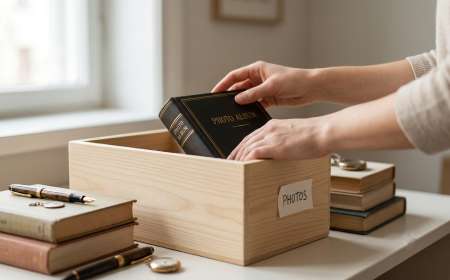
Not everything should go, and right-sizing was never about stripping a home of personality or memory. The trick with sentimental items – children's drawings, old photographs, a grandparent's ornaments – is to be intentional about how they're stored and displayed, rather than letting them spread indiscriminately across every surface. A single, well-chosen memory box or a small display shelf does far more for an object's meaning than having it lost among fifty others gathering dust in a drawer. Choosing a handful of pieces to keep visible, and storing the rest properly and safely, tends to bring far more joy than hoarding everything at once ever did.
Common Mistakes People Make When Downsizing
Even with the best intentions, downsizing tends to go wrong in fairly predictable ways. Recognising these pitfalls in advance is often the difference between a smooth transition and a spare room full of unopened boxes six months later.
- Buying storage before sorting. It's tempting to solve clutter by purchasing a new cabinet or set of shelves, but bringing in storage furniture before you've decluttered simply gives disorganisation more room to spread;
- Keeping "just in case" items indefinitely. Chargers for devices you no longer own, spare parts for furniture that's long gone – if it's been sitting untouched for a year or more, "just in case" has usually already passed;
- Downsizing in one exhausting weekend. Rushing the process leads to hasty decisions in both directions – throwing away things you'll regret, and keeping things you'll simply have to deal with again later;
- Ignoring the emotional side of letting go. Treating every decision as purely practical, with no space for sentiment, tends to backfire; some items genuinely deserve a considered goodbye rather than a rushed one;
- Not measuring the space before buying replacement furniture. A chest of drawers or bookcase that looked perfectly reasonable online can dominate a small room in reality, undoing all the space you just gained;
- Forgetting vertical space. Many homes still store almost everything at floor or worktop height, leaving walls – and the storage potential of wall shelving and floating shelves – almost entirely unused.
Right-Sizing Inside the Home: Creating a Functional Home Office
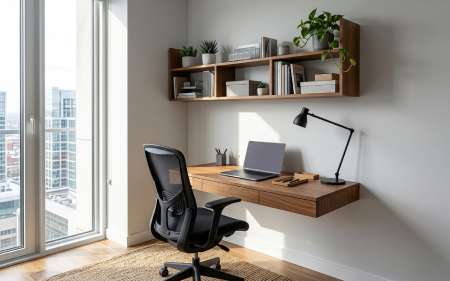
For many of us, the home office wasn't designed – it simply happened. A laptop landed on the dining table, a filing tray appeared on the windowsill, and before long that corner of the house was doing double duty as a workspace without ever being set up to succeed as one. Right-sizing a home office means turning that accidental arrangement into a proper, functional space, even if you're only working with a small alcove or the end of a spare room.
From chaotic corner to productive workspace
- start by defining boundaries, even in an open-plan space: a rug, a room divider, or simply the back of a bookshelf can signal "this is where work happens" and help your brain switch modes accordingly;
- keep your desk surface reserved for what you're actively using. Everything else – reference documents, stationery, chargers – belongs in storage nearby, not scattered across the desktop;
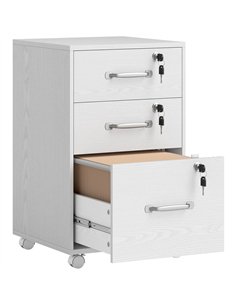
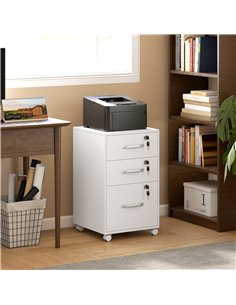
- choose desks and shelving that suit the room's actual dimensions rather than what looks impressive in a showroom. A compact corner desk in a small room will get used far more consistently than an oversized one that blocks the door. Dedicated office storage and slim filing cabinets do far more for a small workspace than a single overstuffed drawer ever will, and modular cube storage is a genuinely flexible option when a room's layout might change down the line;
- invest in seating that supports you properly for the hours you'll spend in it. Ergonomics stopped being a luxury the moment home working became routine, and a well-designed chair pays for itself many times over in comfort and focus.
Taming documents and cables
 Paper and cables are the two things most likely to turn a tidy desk back into chaos within a fortnight. A simple filing system – even just three labelled folders for "active," "to file," and "archive" – prevents documents from forming their own drifts across the desk. Cables, meanwhile, respond well to a bit of routing discipline: cable trays fixed under the desk, clips along the back edge, and a single power block rather than a tangle of extension leads will keep the whole set-up looking, and functioning, far more like an office and far less like a server cupboard.
A properly furnished, well-organised workspace makes an enormous difference to how it feels to sit down and start the day, and it's exactly the sort of transformation our Home Office Furniture & Storage Solutions range is built for – from compact desks and ergonomic chairs through to shelving and filing units sized for real rooms, not showroom floors.
Choosing Furniture That Prevents Clutter
Right-sizing isn't only about removing things – it's just as much about choosing the right furniture to keep clutter from creeping back in. The right piece, in the right spot, does the tidying almost automatically, simply by giving objects an obvious place to live. This is where a good range like FastDaddyshop's comes in genuinely useful: rather than hunting piece by piece, you can furnish an entire room around the storage it actually needs.
Room by room, the furniture that earns its keep
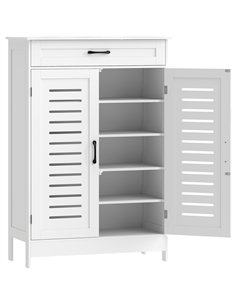
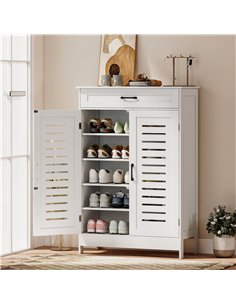
- Hallways benefit enormously from dedicated hallway furniture: a slim console table for keys and post, and a proper shoe cabinet so footwear stops forming a pile by the front door;
- Living rooms stay tidier with a well-chosen sideboard or media unit handling remotes, cables, and games, while a dedicated TV unit keeps the whole entertainment set-up contained rather than sprawling across the floor;
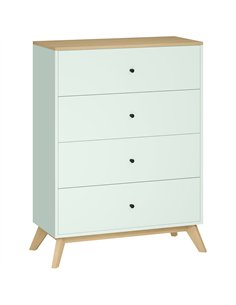
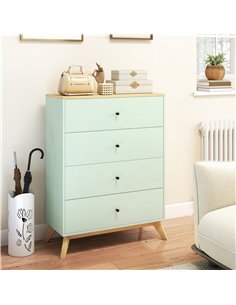
- Bedrooms get an instant lift from a spacious chest of drawers, which absorbs far more than a wardrobe alone ever can, especially for the smaller items that otherwise end up on every flat surface;
- Reading and display areas work best with a proper bookcase for books that are actually read, paired with a display cabinet for the ornaments and keepsakes you'd rather show off than box away;
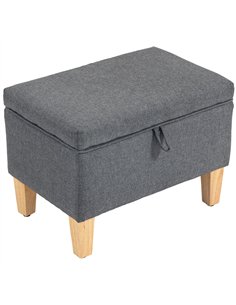
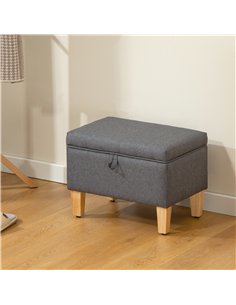
- Entryways and boot rooms are transformed by a storage bench – somewhere to sit while removing shoes that also swallows scarves, gloves, and umbrellas underneath;
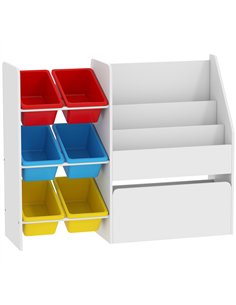
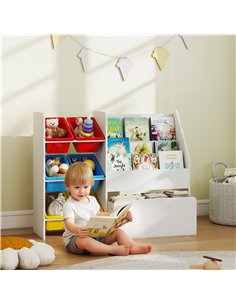
- Children's rooms and playrooms stay far more manageable with proper kids storage and dedicated toy storage, so that tidying up becomes a five-minute job for little hands rather than a nightly parental chore;
- General-purpose rooms – utility rooms, landings, home offices – benefit from a solid storage cabinet for anything that doesn't have an obvious home elsewhere, plus wall shelving or minimal floating shelves to use height instead of floor space.
The common thread across all of these is intention: furniture chosen because it solves a specific storage problem in a specific room, rather than furniture bought simply because it looked good in a catalogue. Get that right, and most rooms stay tidy with barely any ongoing effort at all.
Expanding Your Living Space: Smart Garden & Outdoor Storage
One of the quickest ways to right-size a home without adding a single square metre is to look outward rather than inward. Every tool, bike, and bag of compost currently living in your hallway, understairs cupboard, or spare bedroom is a candidate for outdoor storage instead – and moving it there can free up a surprising amount of indoor space almost overnight.
Letting the garden do more of the work
- a well-chosen garden storage box or shed keeps bulky, occasional-use items – lawnmowers, hoses, seasonal decorations – out of the house entirely, rather than jostling for space in a cupboard designed for coats;
- weatherproof storage protects tools and equipment properly, which actually extends their working life rather than leaving them to rust or warp in a damp corner;
- vertical wall-mounted racks make far better use of a shed or garage than floor-standing shelving, particularly for long-handled tools that otherwise end up leaning haphazardly against every surface;
- defined zones – a seating area, a storage area, a growing area – stop a garden from becoming one undifferentiated space where nothing quite has its place.
Organising tools, furniture, and relaxation zones
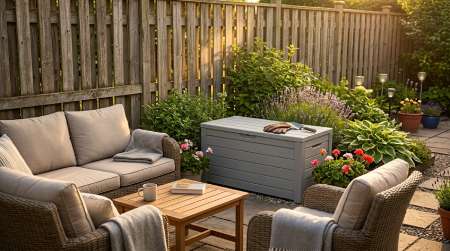 Garden tools tend to multiply quietly over the years until nobody quite remembers what half of them are for. Grouping them logically – digging tools together, pruning tools together, hoses and watering equipment in their own spot – makes the shed usable again rather than something to be approached with dread. Outdoor furniture benefits from the same logic: pieces that fold flat or stack neatly for the colder months take up a fraction of the space of furniture left assembled year-round, and a good storage box or cover keeps cushions and fabrics from perishing over a wet winter.
Done well, this kind of outdoor organisation doesn't just tidy the garden – it genuinely expands how much of your home you can comfortably use, turning the outdoors into a proper extension of your living space rather than a place things go to be forgotten. Our Garden & Outdoor Furniture range covers exactly this: storage boxes, sheds, and outdoor furniture designed to work hard through every season, whatever the size of your plot.
How Long Does It Take?
There's no single answer, and anyone promising a "declutter your whole house in one afternoon" result is usually selling something. As a rough guide, a single drawer or shelf can genuinely be sorted in fifteen to twenty minutes, while a full room – wardrobe, surfaces, and storage included – tends to take somewhere between two and four hours, depending on how much has accumulated. A whole home, tackled properly rather than rushed, is realistically a project spread across several weekends rather than a single one. The goal isn't speed; it's making decisions that actually stick, so you're not repeating the exercise again in six months.
Before and After Examples
- The hallway. Before: shoes in a heap, post piling up on the radiator, coats sliding off overloaded hooks. After: a shoe cabinet by the door, a console table for keys and mail, and a clear floor you can actually walk across;
- The home office corner. Before: a laptop balanced on a kitchen table, cables trailing across the floor, paperwork in three separate "temporary" piles. After: a compact desk with a filing cabinet alongside it, cables routed and out of sight, and a chair that's actually comfortable for a full working day;
- The living room. Before: remotes lost in sofa cushions, DVDs and game cases stacked precariously beside the television. After: a media unit that contains the whole set-up, and a sideboard handling everything else that used to live on the coffee table;
- The garden shed. Before: tools you can't reach without moving four other things first, and a mower wedged in sideways. After: wall-mounted racks, clearly grouped tools, and a shed you can actually walk into.
Expert Tips
- tackle the space you use most often first – the kitchen or hallway, for instance – so the payoff is immediate and motivates you to keep going;
- photograph a cluttered space before you start. It's remarkably easy to forget how bad "before" looked once "after" becomes the new normal, and the comparison is genuinely motivating;
- buy storage furniture last, not first, and only once you know exactly what you're storing and how much space it actually needs;
- label anything that goes into a cupboard, box, or cabinet that isn't opened daily – memory is far less reliable than a label six months down the line;
- involve the whole household in decisions about shared spaces; a system nobody else agreed to is a system nobody else will maintain.
Practical Checklist for a Right-Sized Home
- Empty and assess. Take everything out of the space, or at least off the surfaces, so you can see exactly what you're working with rather than organising around clutter that's still in place;
- Sort honestly. Use the keep, donate, recycle, bin approach, and be firm about items that no longer earn their place;
- Measure before you buy. Storage furniture only works if it actually fits the space and the items you're storing – a beautiful shelving unit that's two inches too wide solves nothing;
- Assign a home to everything that stays. If an item doesn't have a specific spot, it will drift back into a pile within a fortnight;
- Build in a regular review. A quarterly ten-minute check of any given space stops clutter from quietly rebuilding itself the way it always seems to.
Questions to Ask Yourself
- Have I used this in the last twelve months, and would I genuinely miss it if it were gone?
- Am I keeping this because I need it, or because getting rid of it feels difficult?
- Does this space have a clear purpose, or has it simply become wherever things end up?
- If I were furnishing this room from scratch today, would I choose what's currently in it?
- Will this new piece of furniture solve a real storage problem, or just give clutter somewhere new to collect?
Conclusion: Right-Sizing as a Long-Term Habit
Right-sizing your home was never really about the single weekend spent filling boxes for the charity shop – that's just the starting point. The lasting change comes from choosing furniture and storage that actually fit your space and your habits, indoors and out, so that tidiness stops being a constant effort and simply becomes how the house naturally works. A home office that supports the way you actually work, a garden that stores your tools instead of hiding them, and a handful of honest decisions about what deserves a place in your home – together, these do far more for daily life than any single decluttering session ever could.
Start small, pick one room or one corner of the garden, and let the results speak for themselves. Once you feel the difference a properly organised space makes, right-sizing tends to stop feeling like a chore and starts feeling like common sense.